

Learn how ride height, suspension travel, tires and existing faults affect comfort after lowering factory air suspension, and how to compare changes fairly.
Lowering factory air suspension can change ride quality. The result depends on the actual height, available suspension movement, tires, wheels, load and condition of the components. The name of the lowering product does not determine comfort on its own. Virtual Link's advantage is making the height easier to adjust and compare. You can find a stance you enjoy, retain a position that works on everyday roads and keep a separate low setting for parked presentation.
Why the chosen height matters
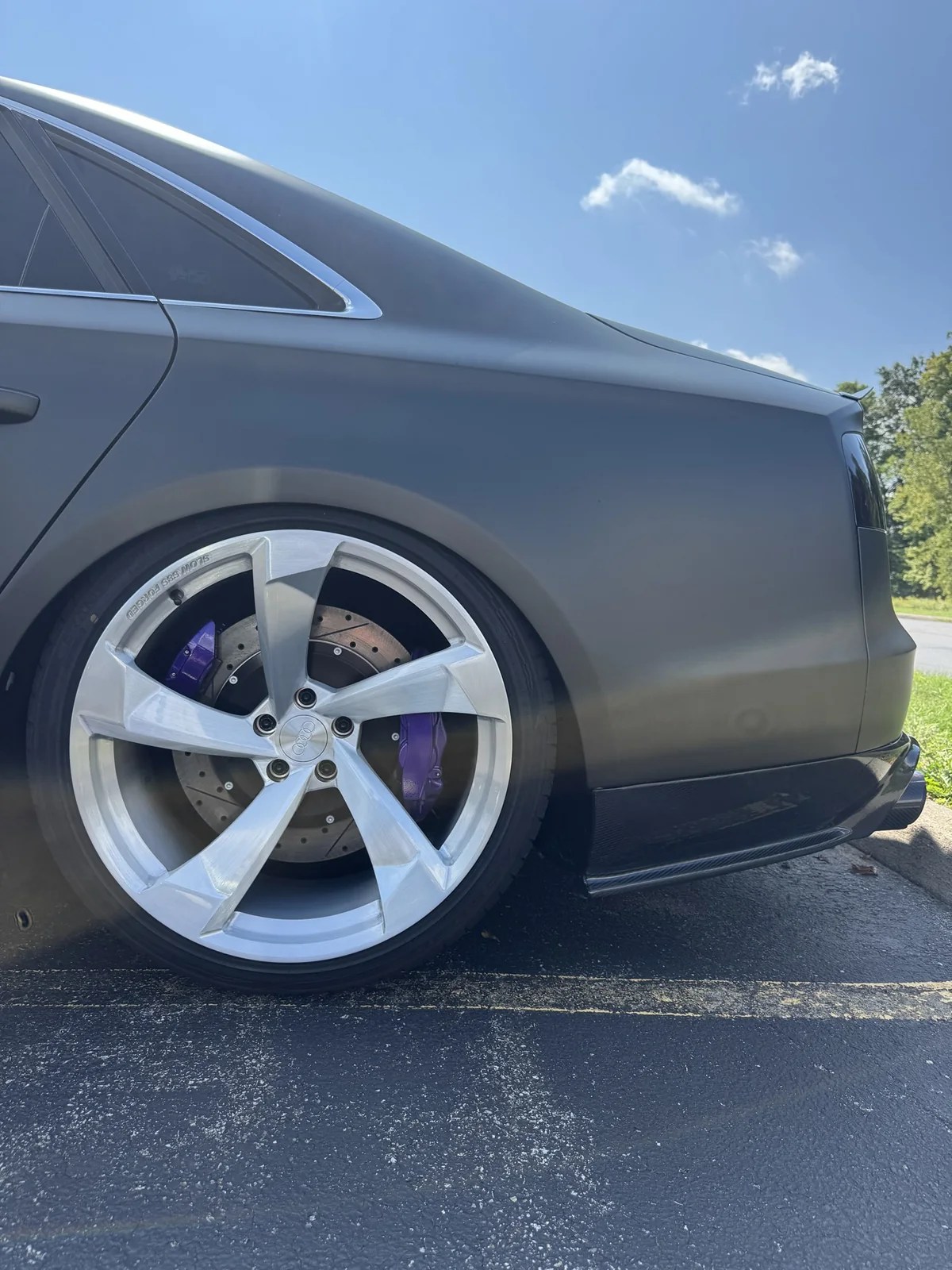
A suspension needs room to move as the wheel follows the road. Changing the resting position changes where the suspension operates within its available travel. An aggressive low setting can therefore feel different from a modest everyday drop, even on the same car with the same controller. Wheel and tire changes can complicate the comparison. If you lower the car and fit another tire package together, a change in ride cannot automatically be attributed to the height alone. Pressure, load and component condition also need to be considered. This is why promises that every lowered position rides exactly like stock are unhelpful. The useful goal is a setup that meets your own expectations on the roads the car actually uses.
Links and controllers change convenience
Lowering links provide a mechanical offset. An electronic controller makes height changes accessible through its controls. Both still work within the physical capabilities of the suspension fitted to the vehicle. With Virtual Link, front and rear adjustment and saved presets make it easier to compare settings. You can try a modest change, retain the earlier profile and return to it if you preferred the ride. The lowering-method comparison covers the broader ownership differences. Corner calibration establishes the baseline; it does not create additional suspension travel or repair worn hardware. Start with a healthy system so your comparison is about the settings rather than an unresolved fault.
Make a comparison you can actually use
Record the starting corner heights, tire pressures and usual load. Choose a familiar route with the surfaces you regularly encounter. Compare one height change at a time rather than changing the tires, damping preferences and ride height together.
Use the Wi-Fi web interface or Bluetooth mobile app to adjust and save the profiles before evaluating them. Note what you prefer: the way the car handles a particular dip, the clearance at an entrance or its overall feel on a familiar section of road. If a setting causes contact, unexpected harshness or a warning, return to the previous checked position and investigate. A lower displayed value is not a reason to accept behavior you dislike. Follow the app and setup guidance for the fitted system.
Record wheel and tire specifications, pressures, load and corner heights when comparing profiles. Change one variable at a time so the result is useful.
Everyday height and parked height can be different
One of the benefits of saved profiles is that you do not need a single position to satisfy every use. Keep the everyday setup that feels right and store a lower parked position separately. Virtual Link can achieve the air-out appearance owners want in many applications, but that does not make the lowest parked setting the best road setting. Our height-range article explains how achievable height, clearance and suitable operation differ. Map the everyday profile to a supported factory drive mode if that suits your routine. After configuration, the phone does not need to remain connected and the app can be closed. The choice you have evaluated becomes easy to use again.
What if the car is already modified?
Existing lowering links and compatible aftermarket suspension components can stay. Document their effects during setup, including any prior coding, so the baseline is understood. Changing components can affect the ride independently of Virtual Link's settings. The most useful result is a repeatable stance that you enjoy driving. Check Virtual Link fitment if convenient adjustment would help you find that balance, and share your current setup if you need guidance on where to begin.
Ready to choose your setup?
Buy now
