

Learn how to confirm Audi air suspension versus DRC or steel springs before buying lowering parts. Use build records, hardware checks and exact fitment.
heights and supported drive-mode mapping. An RS badge does not establish suspension type. Confirm the individual vehicle’s specification and installed hardware.
Virtual Link requires compatible factory air suspension. Before buying a lowering controller, confirm the suspension installed on the actual car. DRC, other steel-spring systems and aftermarket air-management conversions need equipment matched to their own configuration. An RS badge, adaptive-damping description or Drive Select menu does not establish that the car has air springs. Checking the system first is the quickest route to choosing the right parts.
Air suspension and DRC are different systems
Factory air suspension uses air springs to support the vehicle and a control system to manage height. A compatible controller such as Virtual Link adds access to adjustable heights and saved profiles while retaining that factory system. DRC stands for Dynamic Ride Control. Audi's RS6 suspension information describes steel springs with hydraulically linked dampers in the DRC configuration. An air-suspension height command cannot lower those steel springs. Virtual Link does not replace the springs or convert DRC to air suspension. If the car has DRC, identify lowering products intended for that system rather than ordering an air controller based on the model badge.
Look for clues in the MMI
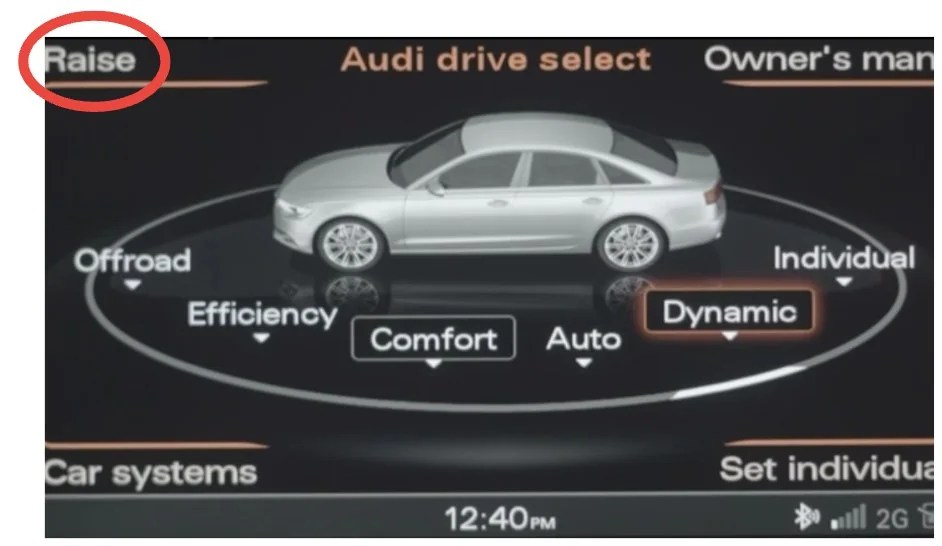
A Raise or Lift control in the vehicle menu is a useful clue. You can also select the available suspension modes while another person observes the vehicle for height changes, under conditions where the factory system permits them. Treat those observations as part of the check. An absent button or no visible movement during one attempt is not proof that the car lacks air suspension. Mode behavior and the conditions required for a height change vary by application. The menu can help narrow the question, but build information and the installed hardware are stronger ways to settle it. This matters particularly when a used car's advertised description is incomplete.
A Raise or Lift control can help identify the system. Confirm with build information and installed hardware, especially if a previous owner changed the suspension.
Confirm the equipment and what is fitted now
Check the factory build specification or ask a knowledgeable workshop to identify the system. Then consider whether a previous owner changed the hardware. A build record describes the original equipment, which may no longer be the full story. If photographs would help with identification, obtain them where the suspension can be viewed safely or have an installer take them. Include clear information about replacement components, previous lowering work and any aftermarket management equipment. Aftermarket air bags alone do not establish compatibility. The relevant question is whether the supported factory air-suspension control system remains in use. Our aftermarket-parts compatibility article explains that distinction.
Choose the appropriate Virtual Link platform
Virtual Link A1 serves supported older applications including C7/C7.5 and D4/D4.5. Virtual Link B1 serves a different group of newer applications. Use the complete vehicle details and the compatibility overview to make the selection. Their installation procedures differ. A1 guidance for one chassis should not be used as a shortcut for B1 or for another body style. Confirm the product first, then follow the matching guide. Existing lowering links do not have to be removed. Share their presence and any coding changes so the starting height and calibration can be understood before saving profiles.
What control does a supported car gain?
Virtual Link provides front and rear adjustment, corner calibration, saved presets and supported factory-mode mapping. Access the controls through the Wi-Fi web interface or Bluetooth mobile app; configured operation continues without keeping the phone connected. That gives supported owners convenient control over their stance while retaining the factory air system. You can refine the setup and keep preferred positions available rather than relying on one mechanical offset. Send Pinnatec your model, chassis and suspension details if you want help confirming the application. Include existing modifications so the recommendation matches the car you actually own.
Ready to choose your setup?
Buy now
